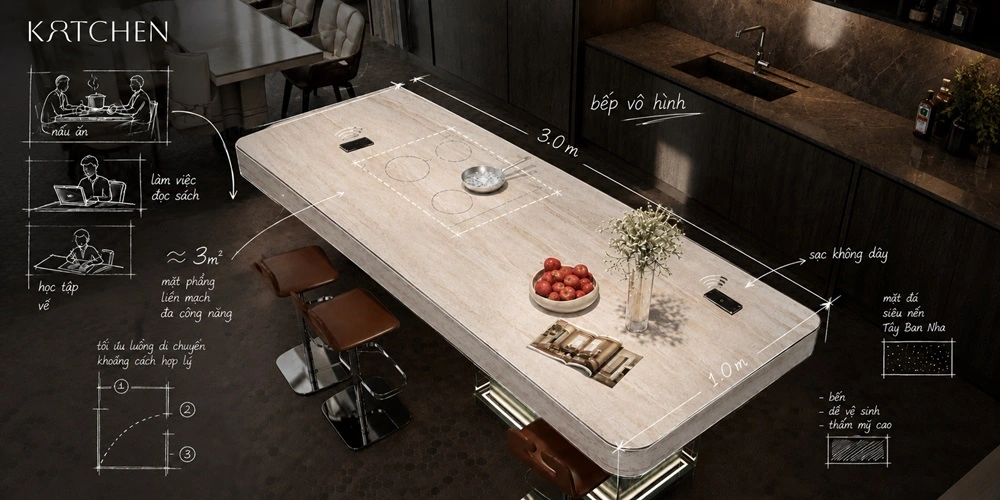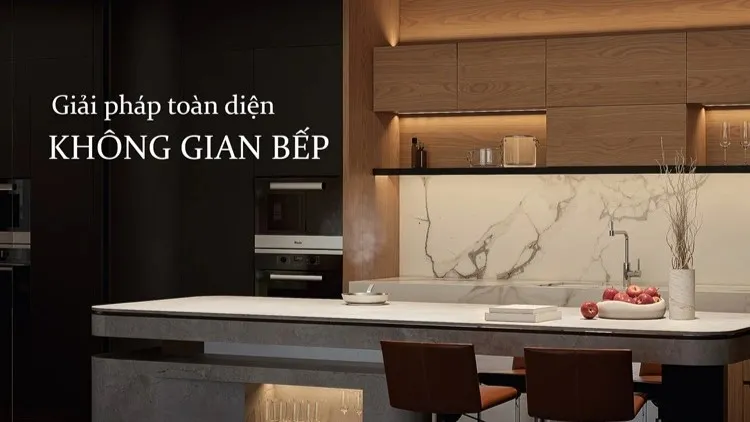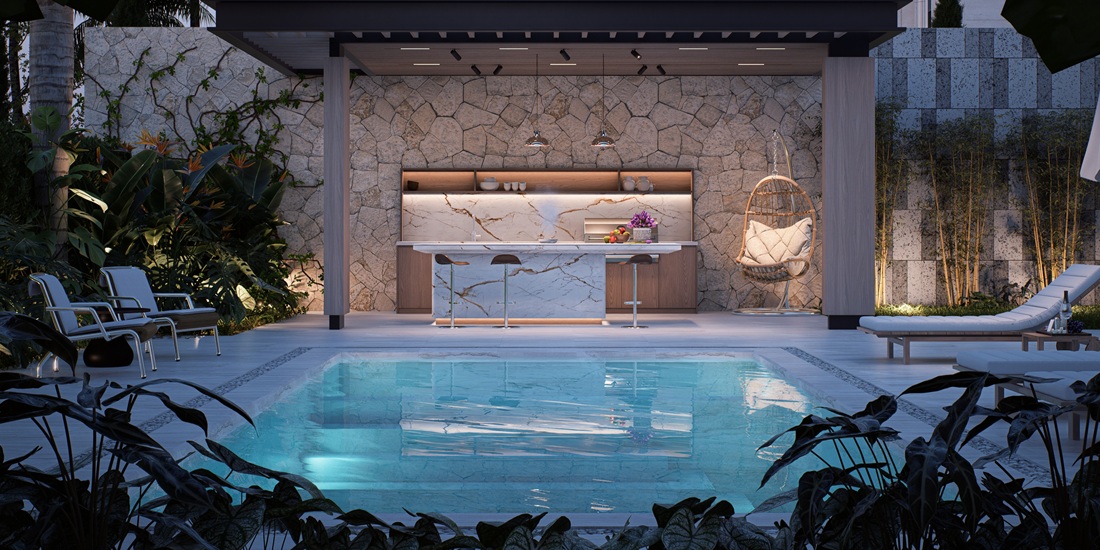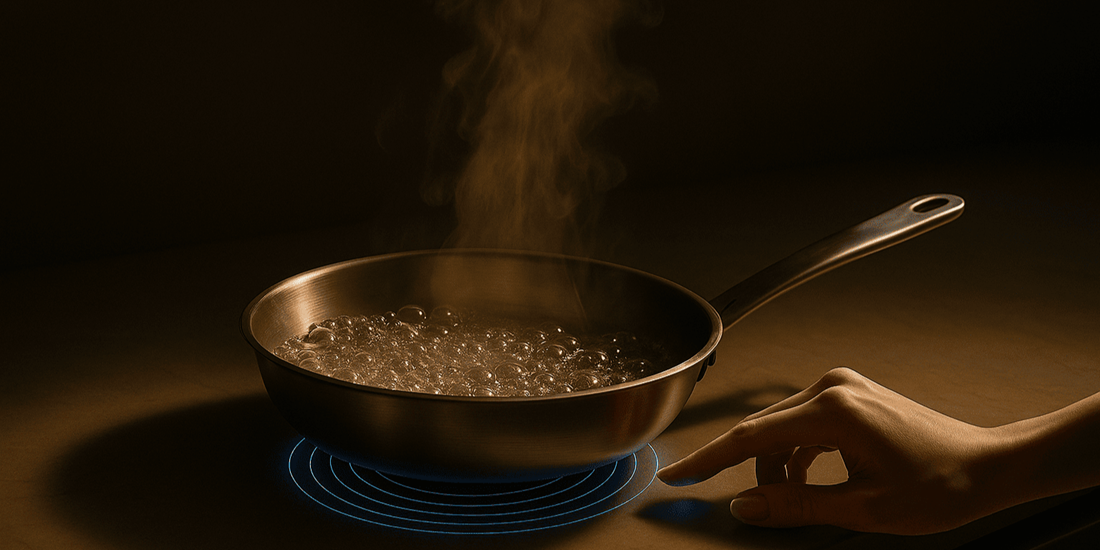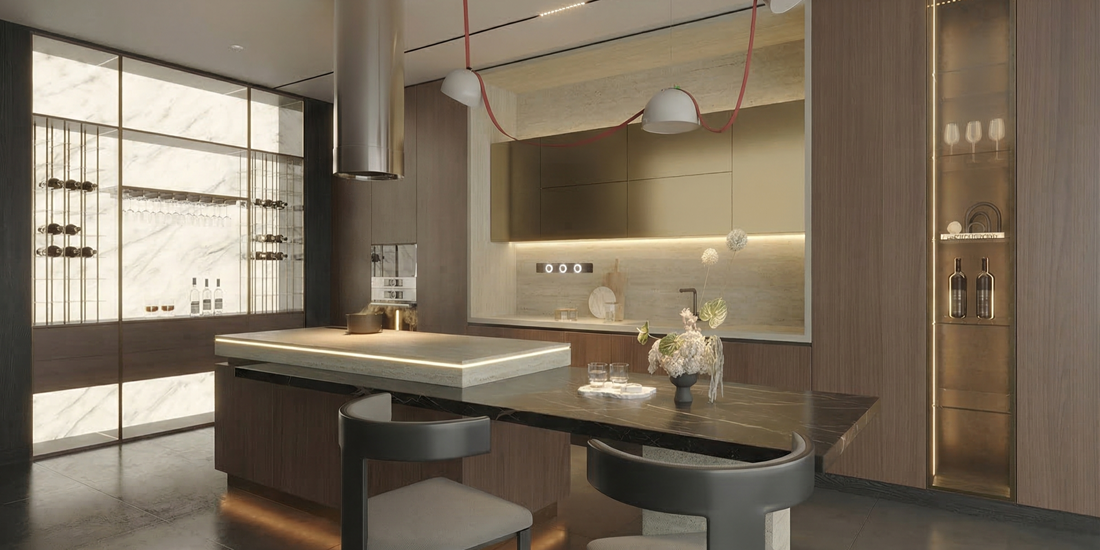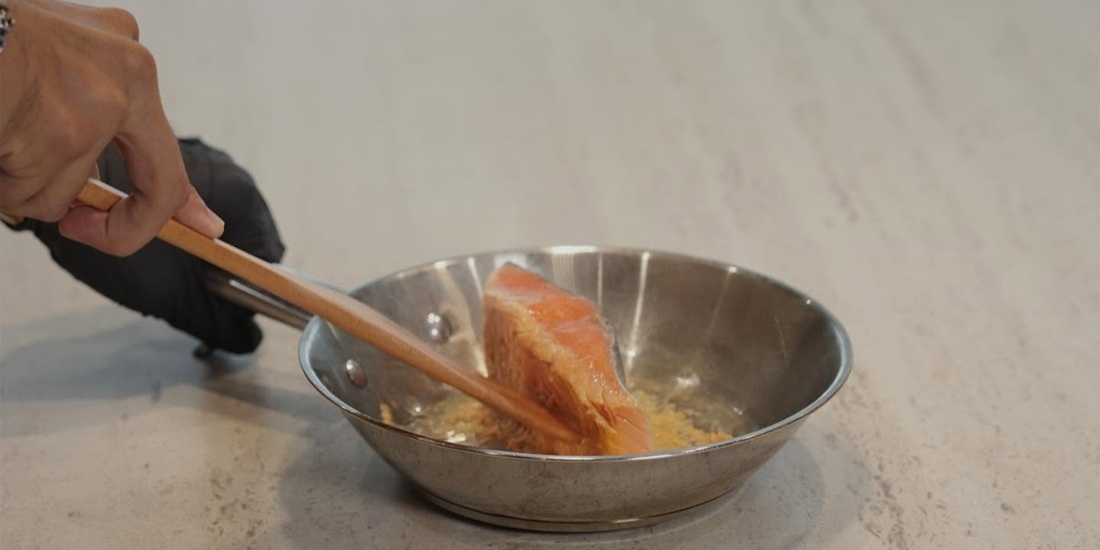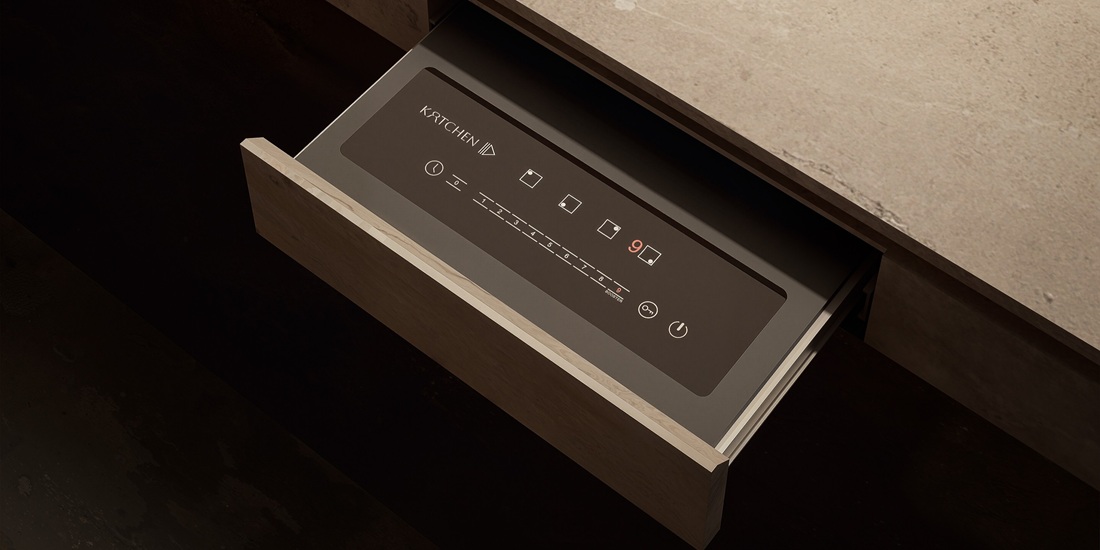

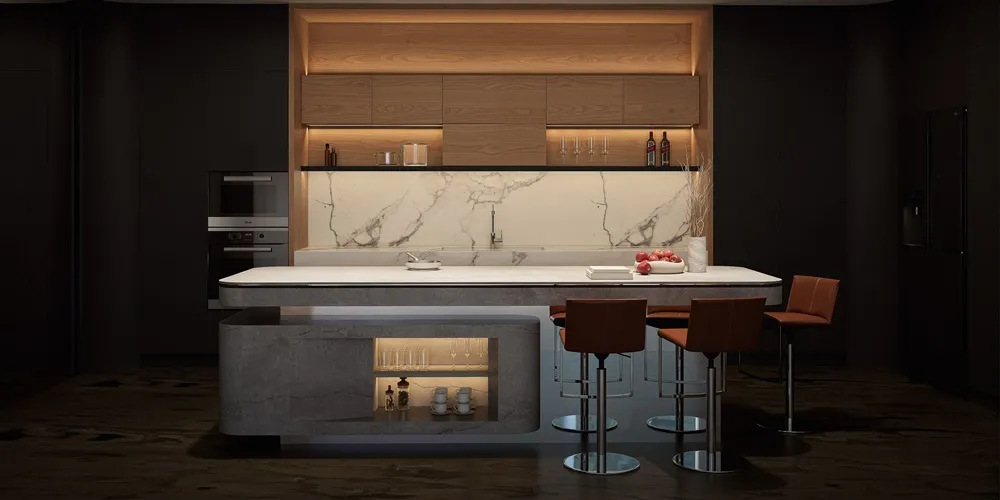
With Kartchen, the surface material used is imported ultra-compact stone from Spain, selected specifically to suit invisible induction systems and their installation requirements. This is not simply an aesthetic choice: the stone surface sits directly between the invisible induction system and the cookware, so its material properties have a direct impact on everyday performance and user experience. Therefore, when choosing stone for invisible induction, color and thickness are not the only deciding factors. The surface must also meet technical requirements for energy transfer, heat resistance, structural stability, and fabrication.
The Stone Surface Is an Essential Part of Invisible Induction
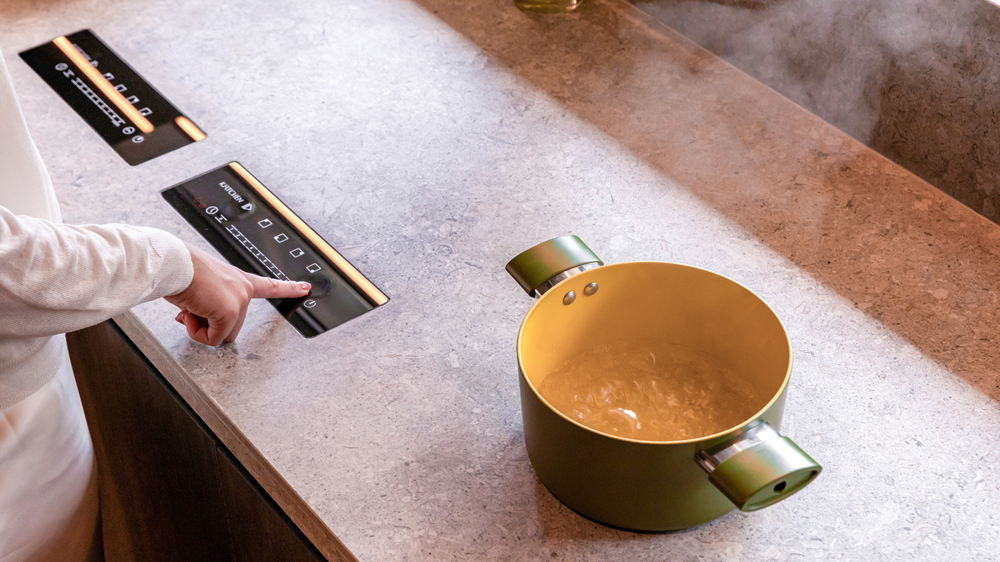
With a conventional induction cooktop, the cooking zones are located on a separate glass surface. With invisible induction, the cooking system is installed beneath the stone countertop, allowing the surface above to function both as a cooking area and as a regular countertop.
This creates one of the defining advantages of invisible induction: when cooking is not in use, the countertop remains visually seamless and can continue to be used for food preparation, dining, or other everyday activities. In return, the surface material must be selected from the beginning according to the technical requirements of the cooking system, rather than based solely on decorative considerations.
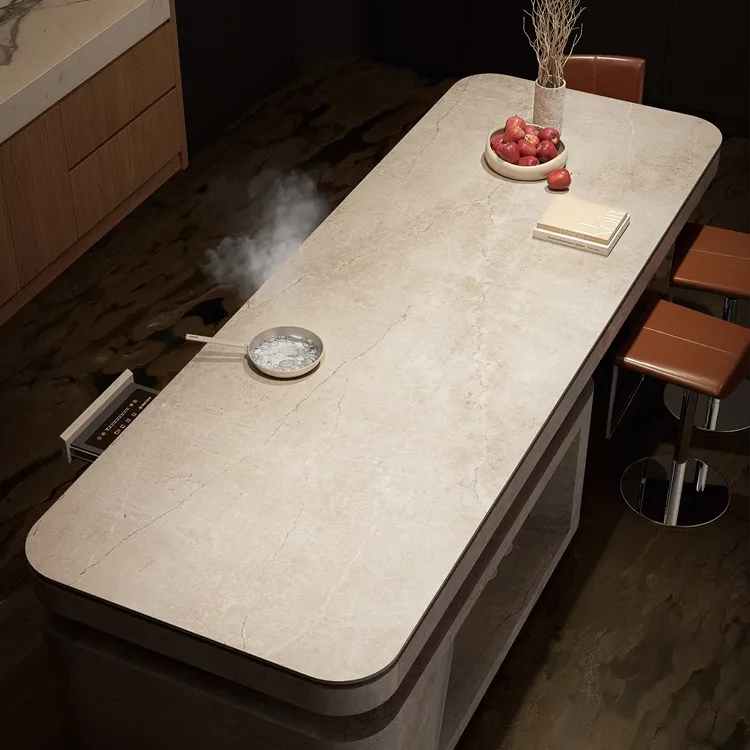
5 Important Criteria When Choosing Stone for Invisible Induction
1. Compatibility with Induction Technology
Invisible induction needs to transfer energy to the cookware through the surface above. Therefore, the type of material, surface composition, and distance between the induction system and the cookware base can all affect performance.
A stone material with good heat resistance is not necessarily suitable if its other properties do not meet the technical requirements of the system.
2. Appropriate Thickness
Thickness directly affects the distance between the invisible induction system and the cookware. A surface that is too thick may reduce energy transfer efficiency.
Therefore, a thicker stone surface does not necessarily mean better performance. The appropriate thickness should be determined according to the system configuration and actual installation method.
3. Heat and Thermal Shock Resistance
Heat is generated within the cookware, but during use, some of that heat can transfer back to the stone surface. The countertop must therefore remain stable under high temperatures and repeated temperature changes during cooking.
Thermal shock resistance is particularly important because it can directly affect the long-term durability of the countertop.
4. Mechanical Strength and Stability
A kitchen countertop must withstand more than heat. It also needs to support cookware weight, everyday impacts, and frequent use. Good mechanical stability helps the surface maintain both its appearance and functionality over time.
In addition to the material itself, the supporting structure underneath must also be properly designed to provide adequate support for the stone surface.
5. Precision Fabrication
The quality of the finished surface depends greatly on the fabrication process. Stone edges, joints, equipment positioning, and the supporting structure must all be handled accurately from the design stage.
With invisible induction, the equipment, stone surface, and cabinetry should be planned as one integrated solution to minimize installation discrepancies and preserve the seamless appearance of the space.
Stone Materials Kartchen Does Not Use for Invisible Induction
Sintered Stone
Kartchen does not use sintered stone as the integrated surface for its invisible induction systems. Surface materials are selected according to specific requirements for thickness, heat resistance, stability, and operating conditions.
Natural Stone
Kartchen also does not use natural stone for invisible induction. The composition of natural stone can vary between stone types and even between individual slabs. When exposed to heat and repeated temperature changes during cooking, unsuitable materials may carry a risk of cracking, breaking, or thermal failure.
This is why the countertop material should be selected based on the requirements of the cooking system from the beginning, rather than choosing the stone first and attempting to integrate the equipment afterward.
The Surface Material Selected by Kartchen for Invisible Induction
Kartchen uses ultra-compact stone imported from Spain for its invisible induction surfaces. The material is selected to meet both the technical requirements of the cooking system and the seamless design language that defines invisible induction.
Homeowners can still choose colors and finishes that suit their interior style from the range of options confirmed by Kartchen as technically compatible.
Three Things to Consider Before Finalizing the Stone Surface
- Do not increase the thickness based on preference alone. The appropriate thickness must be determined according to the invisible induction configuration.
- Do not change the stone material after the technical solution has been finalized. Changing the material may affect operating conditions and the original fabrication plan.
- The cooking system and countertop design should be finalized together. This allows the cooking zone positions, surface dimensions, and supporting structure to be calculated from the beginning, reducing the need for modifications during installation.
Frequently Asked Questions About Stone Surfaces for Invisible Induction
Is thicker stone always better for invisible induction?
No. The thickness must be compatible with the cooking system configuration. A surface that is too thick can increase the distance between the invisible induction system and the cookware, potentially affecting operating efficiency.
Can I replace the stone with a different material after installation?
It is not recommended. The material type and thickness are calculated together with the original installation solution. If the stone surface needs to be changed, the technical specifications should be reviewed before fabrication.
Can an invisible induction stone surface crack?
There is a potential risk if the material is unsuitable, exposed to thermal shock, fabricated incorrectly, or installed on an inadequate supporting structure. Choosing the correct material and following proper installation techniques are therefore essential to maintaining long-term surface durability.
Conclusion
The stone surface of an invisible induction system is not simply an aesthetic finish; it also plays a direct role in cooking performance and the overall stability of the system. A suitable surface must balance thickness, heat resistance, mechanical strength, and fabrication requirements.
With Kartchen, ultra-compact stone imported from Spain is selected from the design stage to create a coordinated solution between the cooking technology, countertop, and surrounding interior.
→ Send your kitchen layout or dimensions to Kartchen for advice on the most suitable stone surface and system configuration.